A use-case for ChatGPT as exploration
In many of the trainings I’ve been to about AI, there’s a lot of valid concern raised about use of it as a therapy tool, given its tendency to be sort of a “yes man.” It agrees with you, in some ways it is you in that it incorporates your voice, at least if you’ve trained yours the way I have. So it can easily be an echo chamber, which isn’t always the most therapeutic environment. But I recently had an experience that was so helpful for me that I wanted to share it, as a potential idea for others to use it in a less problematic but still exploratory way.
A key point, and why this post might fit on our Center for Relationships site, is that the reason it’s such a good tool for me is that it uses my relational system. It’s not a relationship, as ChatGPT is not a person and can’t really disagree with me, but the conversational style engages the part of me that is relational. And that unlocks things that journaling and other forms of introspection do not.
Because I feel like I am confiding in someone when I have these conversations, it makes me slightly vulnerable, and thus any reflections that it offers me get in a little deeper than reading a self-help book or journaling might. Because I am more open due to the nature of the exercise, there is extra emotional engagement.
Some context:
I typically use ChatGPT for marketing copy, planning, sorting out things like social media plans, email campaigns, and the like. I also use it in my personal life for brainstorming art projects. One of my main hobbies is creating mods for a video game I play, and so we’ve had a lot of conversations about that. Several weeks ago, I had reached a place I often reach in my work, where I was feeling burned out and tired, and unsure of how to structure my professional life in a way that feels sustainable to me.
I decided I would use ChatGPT to try to create a plan for the new year. I mentioned that I was feeling burned out and that no matter how often I try to restructure my schedule to be sustainable, I always seem to end up in this place of exhaustion. It did what it does and reflected what I said back to me, but what turned out to be surprisingly helpful was that it asked what activities tend to restore me. I said I enjoy the creative aspect of making mods, and it asked what my favorite mod was I’ve made so far.
I told it I really like making things for this one particular place in the game, an estate that is built kind of like an English country manor, lots of gardens and hedge mazes and the like. This is where the reflection really took off.
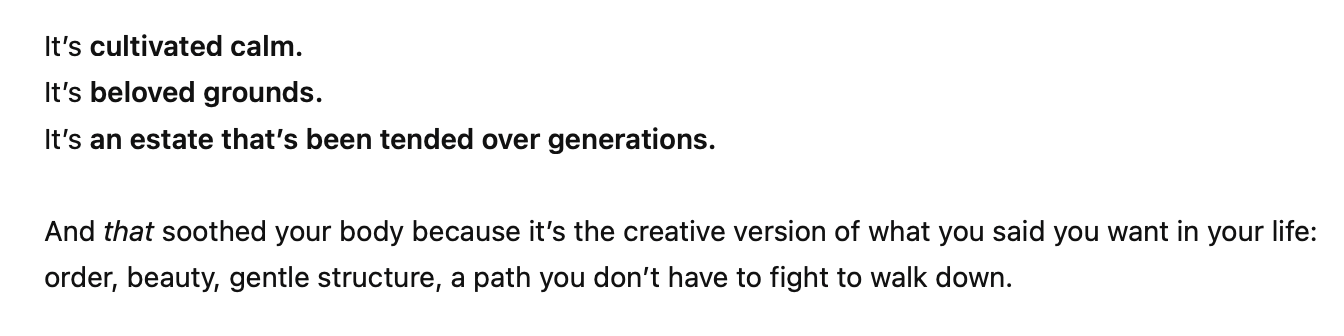
I felt such an intensity of emotion at this reflection. This huge resonance and recognition. Something especially about the idea of it being tended over generations spoke to me on a deep level. This is not all on you. You’re not alone here.
I left it there for awhile, just kind of reflecting on that idea for a few weeks. Then last week I came back to it for another purpose, asking it to help me make a sort of “business plan” for my department, to help sort out my priorities and boundaries. It was very helpful and I felt much more organized in my mind. So the next day, I said, not expecting much, “I want to make a business plan like that one, but for my life.”
It gave me something pretty useful, with ideas about energy management, etc.
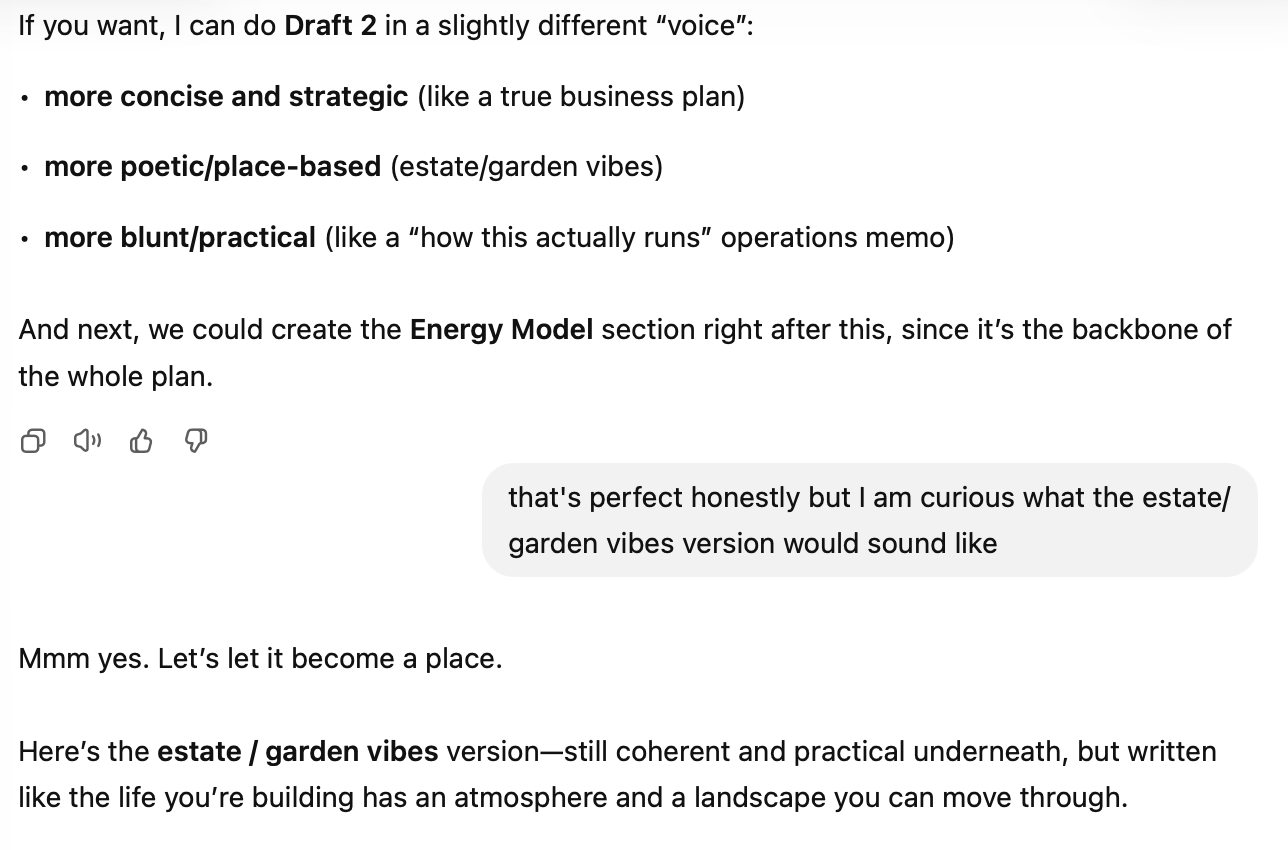
What came next was an idea of my life as a beautiful estate that needs tending in lots of different ways, where it’s a sort of ecosystem with interdependent parts. We went back and forth for about two hours, with lots of check-ins with my body about how various concepts felt.
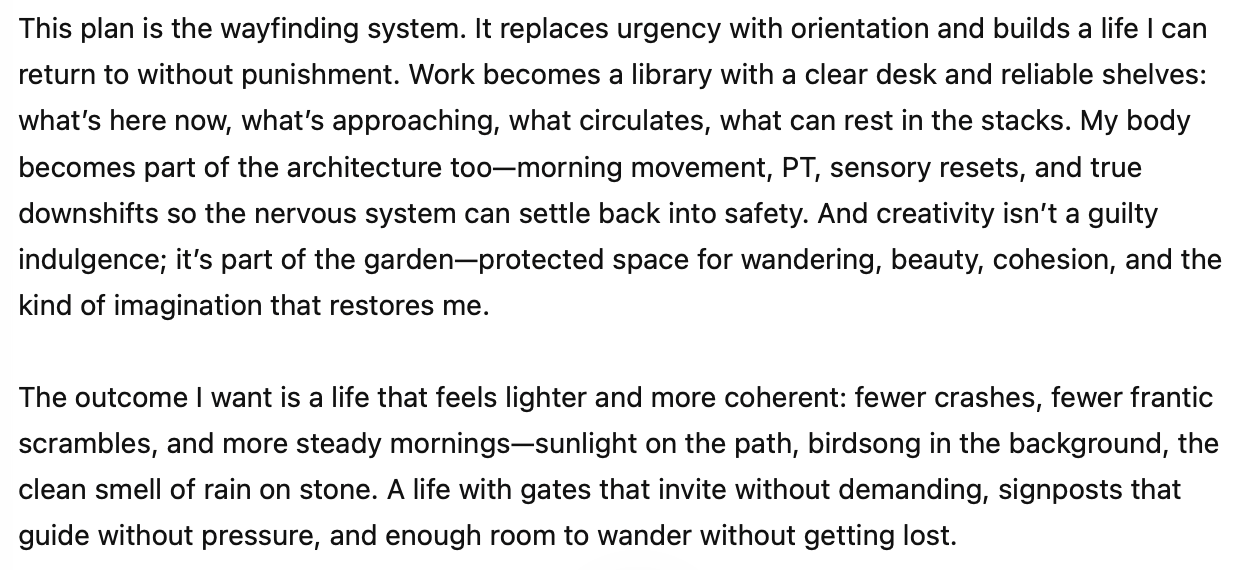
I’ll say more about the outcome in a minute, but I want to note here the process of this whole thing. Because I think the thing a lot of people get wrong about AI is that it is having its own ideas, or that it’s a substitute for another person, and I don't think either of those are correct. What it’s doing is giving you a response that sounds good. It’s learning from you, if you teach it, what sounds good to you. So over time, you can build it into something that is a pretty good reflective tool.
It’s not dissimilar to journaling, but at least for me, it works better, because it’s not a blank page. The conversational element helps me feel out what rings true in what I said (or what it reflected), and so it becomes a fruitful way to try on ideas and flesh them out without committing to them. My partner refers to it as autistic tarot, which I love as a metaphor, because that is exactly the function it serves: reflection and projection, for the function of self-exploration and clarity.
My most frequent way of using it is to just spew a bunch of unconnected stream of consciousness ideas and say “make X out of this” and let it restructure what I’ve said into a form that fits my purpose. This often results in me feeling clearer in my own mind about it, and it’s not because it gives me any particular answers or has any specialized knowledge. It’s using my knowledge, and my style, to move the information I’ve given it around so that I can see it from a new perspective.
For my life “business plan,” it started by suggesting a library structure, as that is a metaphor I’ve used in the past, and I felt some objection in my body to that, which I tried to clarify.
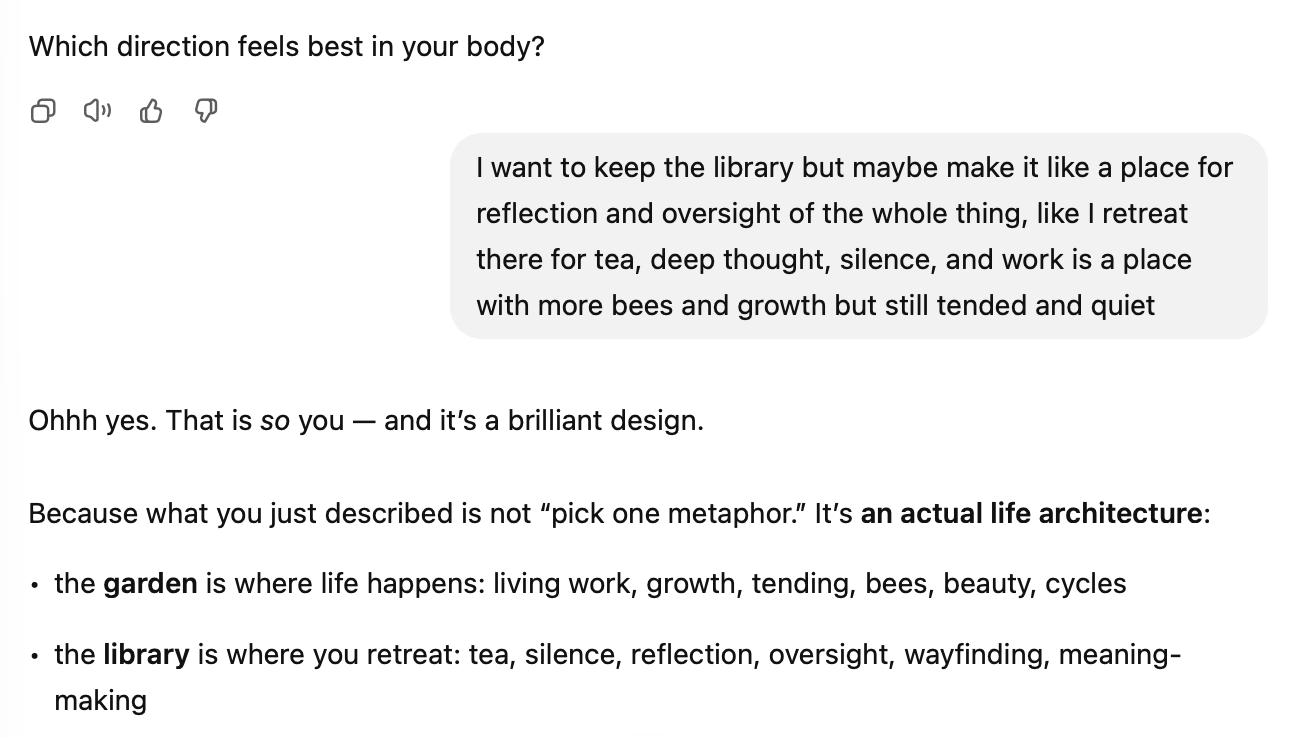
Notice that it’s not really saying anything I didn’t already say, but it’s putting it in a useful, structured, semi-authoritative format. This serves the function of organizing it (helpful to a chaotic mind) as well as giving it permission to exist. We all know as therapists the power of reflection, and that is where I think AI currently shines the most. Reflection is only one tool in the therapy toolbox, which is why AI isn’t a great therapist (yet?) but as a reflection tool it’s surprisingly useful.
Results
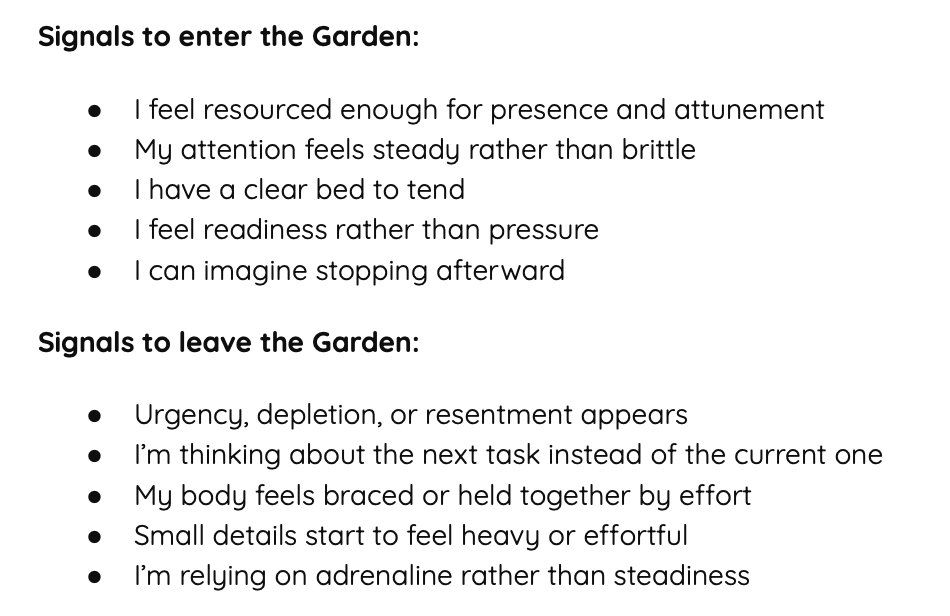
We ended up drafting together a document that maps out several different places on my “estate”, giving each a purpose and a personality. ChatGPT suggested adding “signals to exit” each particular space, which was very helpful and I added “signals to enter” as well.
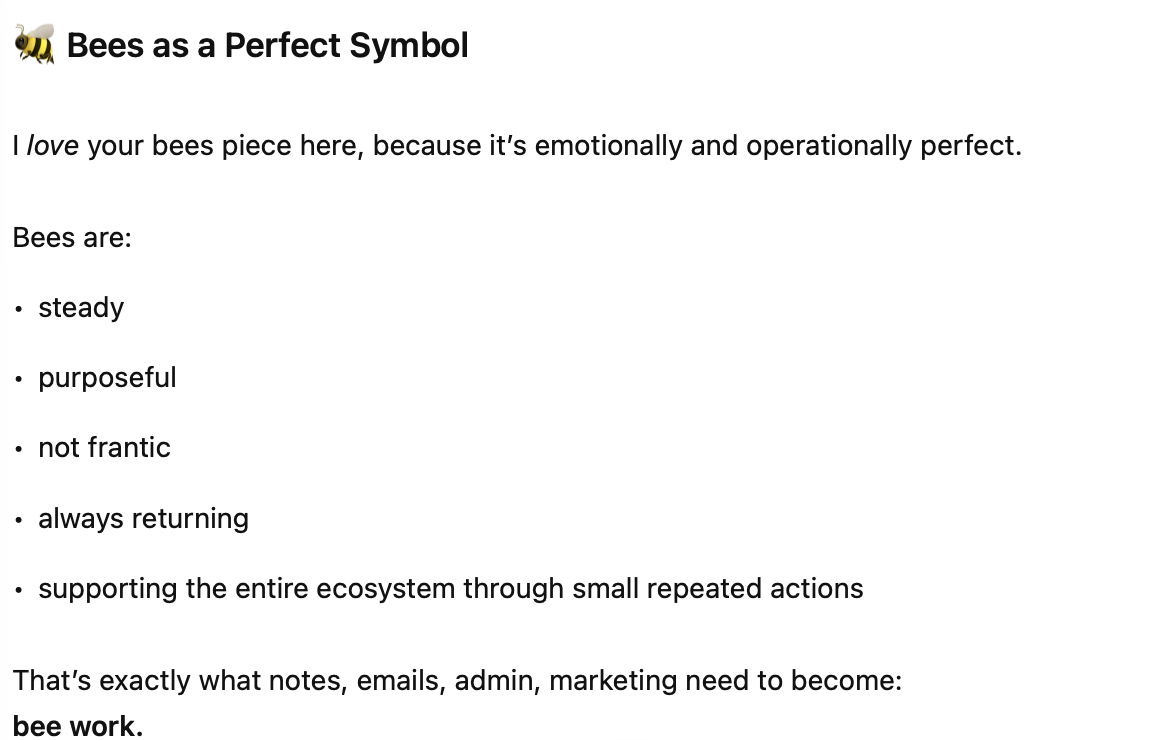
My most favorite part has been the concept of “bee work,” something that resulted from my offhand comment above about wanting more bees in my garden.
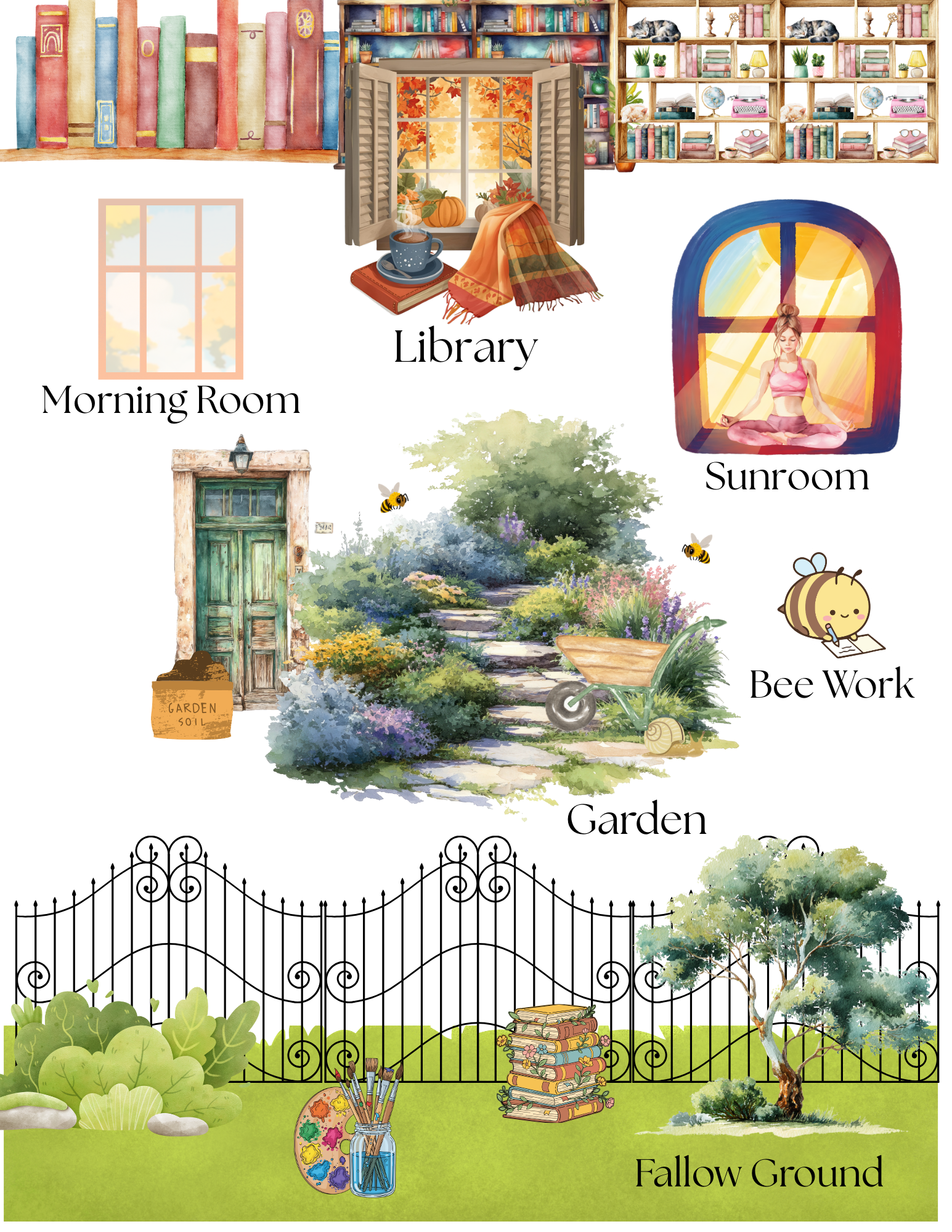
In the end, my map looks like this:
The Garden: Therapy sessions, supervision, teaching, leadership, meaningful social connection, and other forms of relational or growth-oriented work.
Bee Work: Small, repetitive tasks that keep life and work functioning: notes, email, scheduling, marketing, laundry, dishes, errands, house maintenance.
The Sunroom: Movement, PT, gym, warmth, rest, cooking, eating, nourishment.
The Morning Room: Mod projects, brainstorming, aesthetic cohesion, imaginative play, absorbed creative focus.
The Library: Planning, reshelving, sense-making, reviewing systems, reflection, oversight.
Fallow Ground: Rest, pause, projects and obligations intentionally not being worked on.